
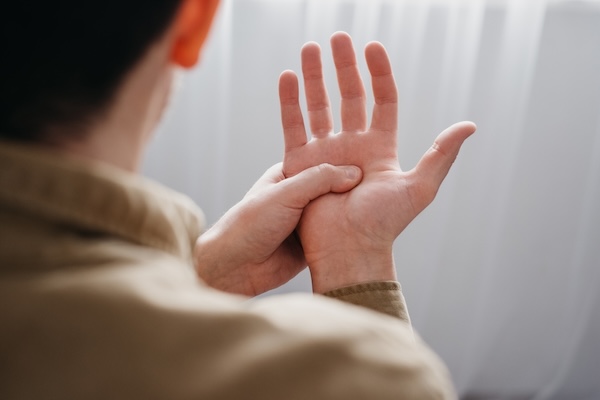
Parkinson’s disease symptoms may be barely noticeable in the beginning. The disease often starts gradually, in ways that are easy to overlook. Slight tremors or shakes, feeling a little stiff, and changes in your handwriting can show up long before you get a formal diagnosis. Recognizing Parkinson’s symptoms as early as possible may support more timely evaluation and care and help you better manage the disease.
Published on:
May 10, 2026
Category:
Parkinsons


About 1.1 million Americans have Parkinson’s disease, making it second only to Alzheimer’s among neurodegenerative diseases.

Parkinson’s disease affects the brain, spinal cord, and nerves, impacting movement, balance, mood, and thinking/attention.

The most common symptoms of Parkinson’s disease include tremors and shaking, rigid muscles, slowed movement, and trouble maintaining balance.

Most adults diagnosed with Parkinson’s disease are over the age of 60, with early-onset Parkinson’s disease being less common.
Multiple factors are under study. Genetics, age, and certain environmental exposures may contribute to loss of dopamine-producing neurons, which affects muscle control and movement. (Having a risk factor does not mean you will develop Parkinson’s.)
Learn more about the potential connection between Parkinson’s disease and common products:
Parkinson’s disease is a neurodegenerative condition that primarily affects how your body moves. It impacts daily functions and can influence overall health over time. Symptoms usually start in your 60s; however, early-onset Parkinson’s can begin at a younger age.
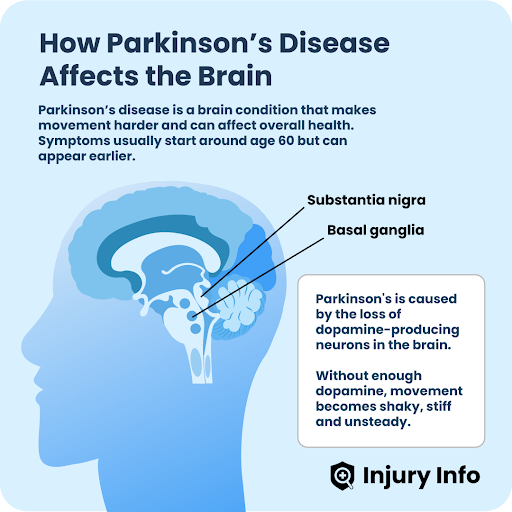
Parkinson's disease involves the loss of nerve cells that produce dopamine. Dopamine is a chemical messenger that helps regulate smooth, coordinated movement. When nerve cells no longer produce enough dopamine, you may start to experience problems moving, including shaky movement, stiffness, and difficulty with coordination and muscle control.
As the disease advances, you may experience additional Parkinson’s symptoms, such as:
Parkinson’s has several forms, and the causes and early signs can vary depending on the type:
Parkinson’s disease symptoms often come on quietly, making them easy to overlook or mistake for something else. Early stiffness or soreness can be mistaken for the effects of exercise or prolonged sitting. Fatigue or mild stress might explain other subtle changes in how you feel. Some ear/nose/throat problems can sometimes mask additional early signs.
Knowing the early signs of Parkinson’s disease, as well as the symptoms that become more noticeable over time, can help you seek evaluation and begin care sooner.

Parkinson’s symptoms are different for different people. For some, early signs are related to movement, such as slight tremors or stiffness. For others, movement feels normal, but they notice a reduced sense of smell, changes in sleep patterns, or mood fluctuations.
Symptoms of Parkinson’s disease can also differ based on age and other health factors. Additionally, the specific pattern of Parkinson’s can influence which symptoms appear first.
Symptoms of Parkinson’s can involve movement, balance, and coordination. Other nervous system symptoms cluster around senses, energy levels, mood, and the ability to concentrate. Parkinson’s symptoms aren’t the same for everyone, but the most common ones include:
Parkinson’s disease is most common in people over 60, but it can sometimes begin earlier, which is known as early-onset Parkinson’s. Men are also more likely to develop the condition than women.
Researchers are still working to fully understand what causes Parkinson’s. Genetics can play a part, especially when the disease starts at an early age.
Exposure to environmental toxins is also being studied. For example, research has reported an association between contact with Paraquat and a higher chance of Parkinson’s.
Some factors associated with increased risk include:
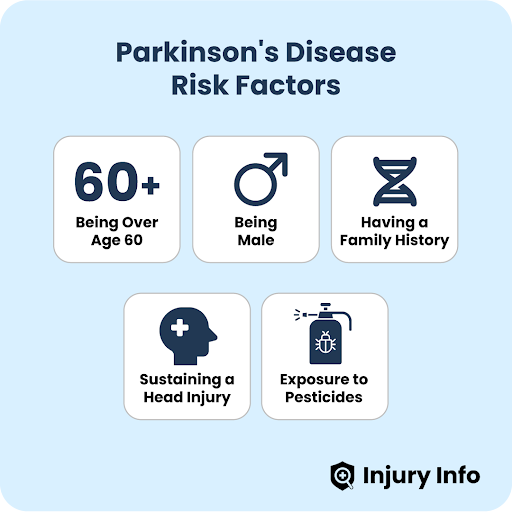
Not only are men about 2 times more likely to get Parkinson’s than women, but patterns of symptoms and treatment side effects can differ. Men may have more motor symptoms on average; women may report more mood symptoms and sometimes greater medication side effects or quality-of-life impacts. Individual experiences vary. Discuss concerns with your clinician.
Older adults are the most likely to get Parkinson’s, affecting approximately 1% of people over 60 and up to about 2% of those over 65. Your chances generally increase with age.
With people tending to live longer, the number of people living with Parkinson’s is expected to grow. Recognizing early symptoms may support earlier evaluation and management.
Early-onset Parkinson’s disease affects adults under the age of 50 and is estimated to account for roughly 10%–20% of all Parkinson’s cases. (Estimates vary.)
People who get Parkinson’s at a younger age may experience different treatment considerations. For example, they’re at higher risk for certain complications from Levodopa, including dystonia (involuntary muscle contractions) and dyskinesia (involuntary movements).
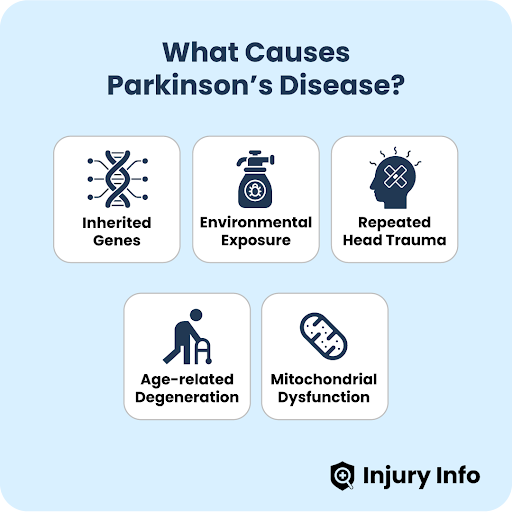
What causes Parkinson’s disease isn’t fully known. Scientists believe it’s due to a combination of influences, including genetics, certain environmental exposures, and other biological factors. Here are some of the studied risk factors:
Learn more about the possible connection between Parkinson’s disease and chemicals in everyday products:
Though no cures have been proven, Parkinson’s disease treatments are intended to improve quality of life and manage symptoms. Paying attention to symptoms and seeking evaluation may help you start care earlier.
The most common treatments involve medications that increase or mimic dopamine activity in the brain. For example, levodopa can reduce tremors and stiffness. Some medications mimic dopamine to stimulate the same receptors in the brain. Your care team will consider benefits and potential side effects when choosing therapy.
When medications have too many side effects or no longer work well, surgery to implant a deep brain stimulation device can help regulate brain activity and reduce tremors, stiffness, and slow movement for some patients.
No matter what treatments you receive, most doctors also recommend physical therapy and regular exercise. These strategies can complement medical care but are not cures.
If you notice possible symptoms, consider talking with a clinician. Early evaluation can help tailor a plan that fits your needs.
Exposure to toxins like Paraquat and some heavy metals has been associated with a higher risk of Parkinson’s disease. While the exact cause of Parkinson’s isn’t well understood, research shows that certain environmental factors may increase the risk. Other factors, like genetics, age, and prior head injury, also appear to increase risk.
The early symptoms of Parkinson’s disease usually develop gradually over time and are easy to miss. You might mistake symptoms for an injury or illness. In older people, Parkinson’s symptoms can be confused with age-related changes.
That’s why it’s important to talk to your doctor. There’s no single definitive test for diagnosing Parkinson’s, but your doctor can use history, neurologic exam, and sometimes imaging or other tests, and can monitor your condition to help start treatment as soon as appropriate.
Exposure to toxins like Paraquat and some heavy metals has been associated with a higher risk of Parkinson’s disease. While the exact cause of Parkinson’s isn’t well understood, research shows that certain environmental factors may increase the risk. Other factors, like genetics, age, and prior head injury, also appear to increase risk.
Parkinson’s is the second most common neurodegenerative disease, right behind Alzheimer’s disease. About 1% of adults over the age of 60 are estimated to have Parkinson’s disease. Approximately 10–12 million people live with the disease worldwide. Estimates vary by source, and totals are expected to rise as populations age.

Learn how tremors differ from other movement symptoms in Parkinson’s disease and when to seek medical guidance.

Learn how early signs of Parkinson’s disease can include sleep disturbances and nighttime movement changes.
Parkinson’s disease can begin years before diagnosis. Explore early non-motor symptoms and subtle neurological changes to watch for and when to seek care.
© 2026, Injury Info. All rights reserved.