
Reconstructing a person's history of talc exposure, which sometimes spans decades, is one of the more complex challenges in talc powder lawsuit proceedings. Memory fades, products change, and research tools have real limitations when looking backward in time. Keep reading to understand the specific factors that make this kind of historical exposure analysis as difficult as it is.
Published on:
October 12, 2026
Category:
Health Resources

Unlike occupational exposures, where workplace records or industrial hygiene reports may exist, consumer talc exposure has almost no contemporaneous documentation. Most people who used talc-containing products over their lifetimes did not keep records of how often they used them, for how many years, or in what quantity. There is no purchase history, no prescription, and no regulatory tracking system that captures individual consumer product use at the level of detail researchers may require.
As a result, the primary method for documenting talc exposure in health research has been self-reported recall, usually by asking individuals to remember past product use through questionnaires or interviews. While practical for large-scale studies, this approach may introduce inherent limitations that researchers must carefully account for when interpreting results.
Think about it this way: could you accurately recall how many times a week you used a particular personal care product ten or twenty years ago? Most people couldn’t, and that's not a personal failing; it's simply how human memory works. The further back in time a person is asked to reach, the less reliable their recall tends to be. In research, this is known as recall bias, and it's one of the most consistently discussed limitations in studies that depend on self-reported exposure information.
Research has found that when women were asked to report their genital talc use at two different points in time, roughly a decade apart, overall consistency was about 87%. That figure sounds solid until you look closer. When questions shifted from broad "ever used" categories to more specific details like frequency, duration, and timing, consistency dropped. The more specific the question, the more room there may be for memory to fill in the gaps imperfectly. That uncertainty may have real consequences. In the context of a talc powder lawsuit, recall bias isn't just an academic footnote; it's a live question about how much weight the underlying data can reasonably carry.
Talc-containing consumer products have not remained static over the decades. Formulations, sourcing of raw talc, manufacturing processes, and the potential presence of contaminants such as asbestos, which can occur naturally near talc deposits, have varied across manufacturers, product lines, and time periods.
This means that two individuals who both report using talc-based body powder for twenty years may have had meaningfully different actual exposures depending on which products they used and when. Researchers and legal experts working on talc powder lawsuits must grapple with the reality that "talc exposure" is not a uniform quantity because it is shaped by product-specific factors that are often impossible to reconstruct from memory alone.
Not all talc exposure is equivalent. Short-term or infrequent use is scientifically distinct from decades of daily application or occupational exposure, yet both may be captured under the same broad "ever use" category in some study designs, which obscures important differences between exposure groups.
Exposure estimates based on a short reference period may not accurately reflect long-term patterns of use, particularly when the health outcomes of interest have extended latency periods. The induction period for some conditions studied in relation to talc can span decades, meaning that exposure assessments capturing only a narrow window of time may systematically underestimate or misclassify cumulative exposure in ways that affect how research is interpreted.
When you layer together imperfect recall, undocumented product use, shifting formulations, and exposure windows that span decades, you arrive at one of the harder problems in this area of research: trying to reconstruct past exposures long after they occurred. Scientists call this retrospective exposure analysis, and while it's sometimes the only available option for studying consumer products, its limitations are well-documented.
Even studies designed to be more rigorous face this problem. Research has found that prospective cohort studies of talc often capture exposure at a single point in time rather than tracking it across a person's life, meaning changes in use patterns could be missed entirely. If a study's starting point comes after years of product use have already occurred, it may be difficult to recover that history with precision. In the context of a talc powder lawsuit, that prior history may be difficult to reconstruct with precision. These are exactly the kinds of scientific constraints that come under close scrutiny in a talc powder lawsuit.
Quantifying historical talc exposure is genuinely complex science, shaped by the potential limits of human memory, possible gaps in product documentation, and the inherent challenges of retrospective research. These factors are an important part of making sense of how talc powder lawsuits are built and argued.
If you choose, you may visit InjuryInfo.com to explore general educational resources. Injury Info provides information only and does not offer medical advice. You may share information for preliminary legal review. Initial consultations are free and carry no obligation. Contacting us does not create an attorney–client relationship. No outcome is guaranteed, and any matter requires claim-by-claim evaluation by licensed counsel.
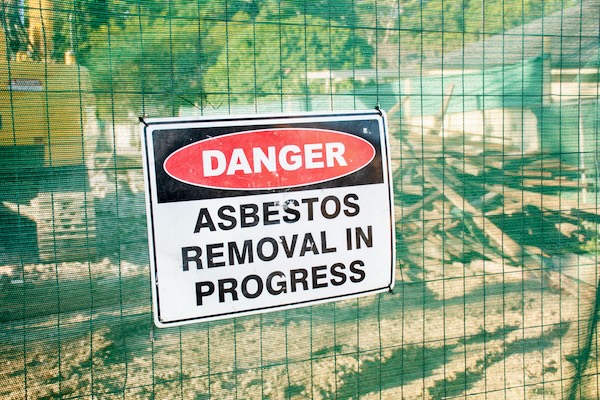
Occupational asbestos exposure differs from environmental and take-home exposure. Learn why researchers evaluate these pathways separately.

Learn how workplace health research works, its methods, and its limits.
Exposure to asbestos, pesticides, and other toxins can cause cancer and serious illness. Learn what symptoms to watch for.
© 2026, Injury Info. All rights reserved.