
Looking after someone with Parkinson’s can be rewarding, but it also comes with challenges. You might help with their emotions, physical needs, daily routines, and support their medical care and symptom management.
Feeling overwhelmed as a caregiver is normal. Taking care of yourself matters just as much as caring for your loved one. When you look after your own well-being and ask for support, you can give better, more caring help. Here are some practical tips and strategies to support both you and your loved one.
Published on:
May 20, 2026
Category:
For Caregivers

Parkinson’s disease affects the nervous system, impacting movement and bringing emotional, physical, and lifestyle changes to patients and their loved ones. To provide care, you can offer your loved one vital support throughout treatment and all aspects of living with the condition.
The medical side of care is just the beginning. There’s also navigating complex insurance and healthcare systems, coordinating with medical providers, dealing with financial planning, and potentially exploring legal options. Throughout all of this, taking care of your own well-being is important. Don’t hesitate to ask for help from healthcare teams or support groups, and make time for regular rest.
Parkinson’s caregiver support is available. Organizations and community resources offer educational materials, helplines, and guidance for both patients and caregivers. Connecting with others who understand what you’re going through can make a meaningful difference.
Learn more about the potential connection between Parkinson’s disease and common products:
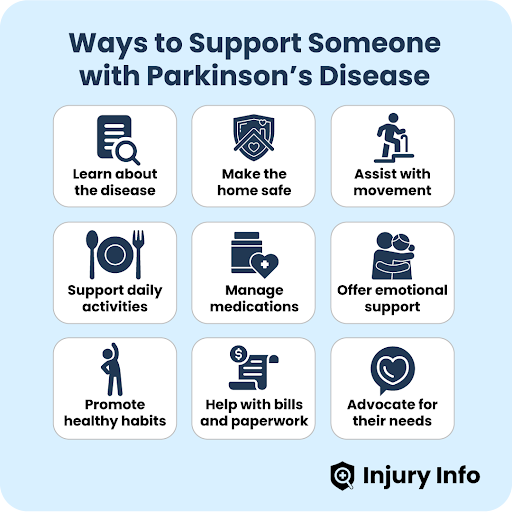
Knowing how to help someone with Parkinson’s begins with understanding the disease and what your loved one is going through.
Below, we offer advice for helping with daily routines, managing medications, and supporting the emotional well-being of someone with Parkinson’s. Care needs can change over time, so staying flexible and informed helps you adapt as the disease progresses.
When caring for someone with Parkinson’s, it helps to know as much about the disease as you can. This way, you can better support your loved one through changes as the disease progresses.
Understanding how Parkinson’s affects movement, balance,facial expressions,mood, and thinking will help you create a safe environment and make daily routines easier. You can start by learning about the symptoms and stages of Parkinson’s disease and what each may mean for day-to-day living.
Caring for a patient at home is often the ideal approach. This will allow them to maintain as much normalcy and independence as possible. It can also reduce stress and help preserve familiar routines, especially in the early stages.
Safety and comfort are important considerations for making life as easy as possible. Some tips include:
Learning how to help someone with Parkinson’s usually involves becoming familiar with mobility aids and the proper techniques to support their movement.
People with Parkinson’s may experience stiffness, tremors, and slowed movement, as well as difficulty with balance, which can make walking, standing, and getting in and out of cars challenging. Working with a physical or occupational therapist can help you both learn safe ways to assist.
A big part of caring for someone with Parkinson’s disease is helping them stay independent and maintain their dignity.
As a caregiver, you can help support daily tasks and make routines easier in the following ways:
One of the most important parts of Parkinson’s care is managing medications. This includes ensuring prescriptions are filled on time and taken as directed. For example, taking medications like Levodopa on schedule helps maintain symptom control.
Another aspect of managing medications is monitoring for side effects and potential interactions. Keep a written log of symptoms and share it with your loved one’s healthcare team so they can adjust treatment as needed.
Paying attention to the emotional aspects of the disease is an integral part of Parkinson’s care. Your loved one may feel frustrated, experience anxiety, or start to feel disconnected.
Learning how to talk to someone with Parkinson’s in a way that shows compassion and support is important. A few tips include:
Caring for someone with Parkinson’s includes promoting movement, nutrition, and rest, all of which help support energy and function. As a caregiver, you can:
Someone with Parkinson’s may find it challenging to manage finances or paperwork, especially if tremors or fatigue make it hard to write or focus. You can help by:
Being a Parkinson’s caregiver often means helping your loved one communicate with healthcare providers and make informed decisions. You can:
You don’t have to be the main caregiver to make a meaningful contribution. Anything you do that eases the burden of care and reminds someone of their importance and value is helpful.
Some helpful ways to contribute include:

Caring for someone with Parkinson’s is rewarding, but it can also be draining. Parkinson’s is a long-term disease, so taking care of yourself to prevent burnout is essential. When you’re overloaded, it makes it difficult to provide steady, positive care to your loved one.
What are some signs that you may be reaching your limit?
Remember, taking time for yourself isn’t selfish. To help prevent burnout:
Learn more about the potential connection between Parkinson’s disease and common products:
People with Parkinson’s often experience tremors, stiffness, slow movement, and balance issues, which can make walking and daily activities difficult. Falls are a common risk. Caregivers can help by maintaining a safe environment and encouraging gradual movement and rest.
Yes, someone with Parkinson’s can live alone in the early stages of the disease. However, it’s important to maintain a safe environment, create an emergency plan, and schedule regular check-ins.
Thinking through daily routines and developing strategies to keep your loved one independent for as long as possible are helpful. You’ll also want to check on them regularly and set up a plan to follow in case of an emergency.
A balanced diet rich in antioxidants, fiber, and omega-3 fats may help support overall health. Always consult a healthcare professional or nutritionist for individualized guidance.
You’re not alone. Organizations such as the Parkinson’s Foundation, American Parkinson Disease Association (APDA), and The Michael J. Fox Foundation offer helplines, educational resources, and community programs. Hospitals may also have patient advocates or social workers to connect you to local resources.
Yes. The Family and Medical Leave Act (FMLA) provides job protection while you take unpaid time off to care for someone with a serious health condition. Some states and employers offer additional benefits or paid leave options.
People with Parkinson’s may qualify for disability benefits if symptoms significantly limit their ability to work. Eligibility depends on medical documentation and the impact of the disease; assistance from a healthcare provider or a disability specialist can be helpful.

Being a caregiver to someone with testicular cancer means offering practical help and emotional support. Learn what to expect and how you can help.

Learn how to support a loved one with meningioma. Get guidance on daily care, emotional support, home safety, and long-term caregiver well-being.

Caring for someone with kidney cancer can include encouraging healthy habits, helping with daily chores, and offering hope. Explore more ways to help.
© 2026, Injury Info. All rights reserved.