
If you have a history of asbestos exposure and are experiencing persistent shortness of breath, chest discomfort, or a cough that will not resolve, these symptoms warrant prompt medical evaluation, as they may be among the earliest recognizable signs of pleural mesothelioma. This malignant cancer develops in the pleura, the thin tissue lining the lungs and chest wall, and has been linked to prior asbestos exposure. Symptoms may not appear until 20 to 50 years or more after exposure, meaning many people no longer connect their current health changes to decades-old contact. Learning what these early warning signs look like and when they deserve medical attention can make a meaningful difference in how quickly a diagnosis is pursued.
Published on:
June 8, 2026
Category:
Mesothelioma

Unlike primary lung cancer, which originates within the lung tissue, pleural mesothelioma arises from the mesothelial cells lining the chest cavity. Its symptoms are driven not only by tumor growth but by the progressive buildup of fluid between the lung and chest wall, a condition called pleural effusion, which compresses the lung and restricts normal breathing.
Shortness of breath and sharp chest pain are the most common presenting symptoms, occurring in at least 60 to 90 percent of patients. These symptoms closely mimic those of pneumonia, pleuritis, and chronic obstructive pulmonary disease, which is why mesothelioma is frequently misdiagnosed or evaluated late, particularly when a patient's asbestos exposure history is absent from the clinical conversation.
Disclosing any history of asbestos exposure to a treating provider, even if that exposure occurred decades ago, is one of the most important steps a patient can take toward an accurate and timely diagnosis.
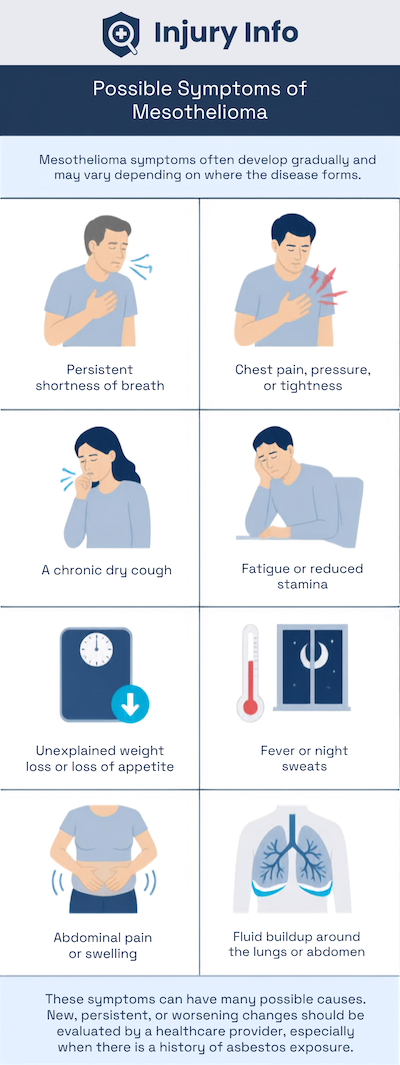
In the early stages, pleural mesothelioma often produces only vague, nonspecific symptoms that are easy to attribute to aging, minor illness, or everyday fatigue. Fatigue, unexplained weight loss, and low-grade fever are systemic symptoms that may precede more recognizable respiratory signs.
Early-stage patients may notice only mild shortness of breath with exertion or subtle chest tightness that gradually worsens over weeks or months. A reduction in physical tolerance, such as difficulty managing stairs or distances that previously caused no difficulty, can be one of the earliest functional signals that something is changing in the chest. These changes are easy to overlook because they develop slowly and individually seem unremarkable.
Without a specific reason to consider a connection to past asbestos exposure, many people delay seeking evaluation until symptoms become more disruptive. By that point, the disease may have progressed to a later stage where treatment options are more limited, which is why any persistent or worsening symptom in someone with a known asbestos exposure history deserves prompt clinical attention.
As the disease progresses, more recognizable respiratory symptoms tend to emerge. The hallmark clinical manifestations of pleural mesothelioma include severe chest pain and progressive shortness of breath, with additional symptoms such as a persistent dry cough, nausea, pronounced weight loss, fever, and night sweats also occurring.
Chest pain is typically described as a dull ache or pressure, often felt in the lower chest, upper back, or between the shoulder blades, rather than a sharp, localized pain. Additionally, pleuritic pain, usually described as a sharper chest pain that increases with deep breaths, is another common symptom. A dry, persistent cough that does not respond to standard treatment and worsens over weeks or months warrants investigation.
Malignant pleural effusion is the most common initial presentation of pleural mesothelioma, with more than 95% of individuals experiencing it at some point during their illness. It is an accumulation of fluid that restricts the lung's ability to expand fully, producing shortness of breath, chest pressure, and cough, and is often what prompts a patient to seek care for the first time. When fluid accumulates in significant volume, it may need to be drained through a procedure called thoracentesis to relieve symptoms and allow laboratory analysis for the presence of cancer cells.
Clinicians also look for pleural plaques, thickened areas on the pleura visible on imaging, which may indicate past asbestos exposure. Additional warning signs that may prompt further workup include unexplained night sweats, progressive difficulty swallowing, and swelling of the face or arms.
Anyone with a history of asbestos exposure who develops repeated bouts of pneumonia, a persistent cough, chest pain, or shortness of breath should consult a healthcare provider and specifically disclose that exposure history.
A diagnostic workup typically begins with imaging, such as a chest X-ray or CT scan, to identify pleural thickening, an effusion, or masses. If a pleural effusion is present, sampling the fluid for cytological examination is typically the first step, though pleural biopsy is generally recommended because imaging and fluid cytology alone cannot definitively distinguish mesothelioma from other pleural conditions. Providing a complete occupational history helps clinicians pursue the appropriate diagnostic pathway rather than treating symptoms as an isolated respiratory illness.
If you or someone you know has been diagnosed with pleural mesothelioma and has a history of occupational or environmental asbestos exposure, learning about both the medical and legal dimensions of your situation matters. Injury Info has evidence-based resources on pleural mesothelioma and asbestos exposure history. Learn more today.

Weight loss alongside fatigue or breathing difficulty may signal mesothelioma. Learn about the connection to asbestos exposure & what diagnosis involves.

Learn the main types of mesothelioma and how they differ in symptoms, diagnosis, and treatment to help patients and families understand their diagnosis.

Persistent shortness of breath may signal pleural effusion, a common early finding in mesothelioma. Find out how it may be linked to asbestos exposure.
© 2026, Injury Info. All rights reserved.