
Persistent shortness of breath, chest pressure, or a cough that does not resolve, particularly in anyone with a history of asbestos exposure, should prompt medical evaluation without delay. These are among the most common early signs of pleural effusion, an abnormal buildup of fluid between the layers of tissue lining the lungs and chest wall, and one of the most frequently reported clinical findings in pleural mesothelioma. Learning how this fluid develops and when it warrants investigation can help support a timely and accurate diagnosis.
Published on:
June 8, 2026
Category:
Mesothelioma

A pleural effusion is an abnormal accumulation of fluid within the pleural space, the area between the layers of tissue that surround the lungs and line the chest wall.
Under normal conditions, a thin layer of fluid in this space allows the lungs to expand and contract smoothly. When disease disrupts the balance between fluid production and absorption, excess fluid accumulates, compressing the lung and producing symptoms.
In pleural mesothelioma, this disruption is directly tied to tumor activity in the pleural lining. As mesothelioma tumors spread across the pleura, they can block lymphatic vessels or blood flow, leading to fluid accumulation that compounds as the disease progresses. The process may begin before other symptoms appear, which is why pleural effusion is often the first clinical finding that brings a patient to medical attention.
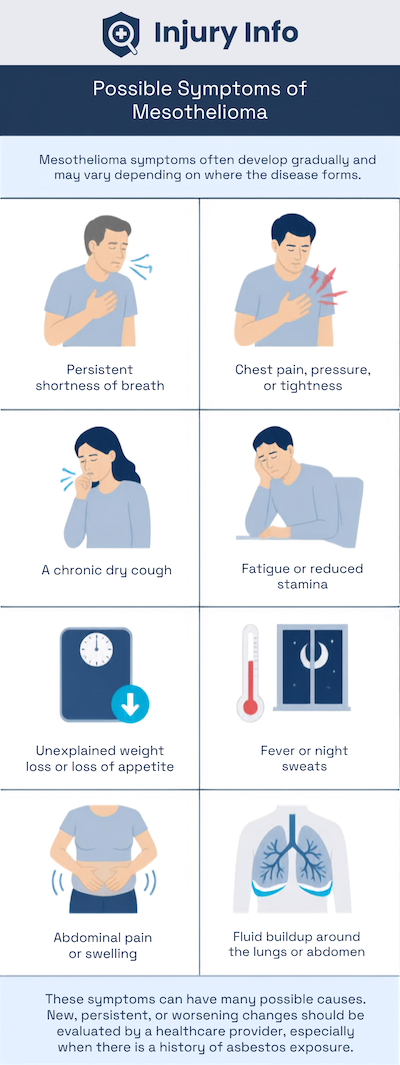
When fluid begins to accumulate around the lungs, it produces a recognizable yet often underestimated set of symptoms. Shortness of breath is typically the most prominent, initially noticeable only with exertion, but worsening at rest as fluid volume increases. Chest tightness or pressure, a persistent dry cough, and general fatigue are also commonly reported in early stages.
Because these symptoms overlap significantly with those of pneumonia, heart failure, and other pulmonary conditions, mesothelioma is frequently misdiagnosed or evaluated late.
Anyone who has worked in industries with known asbestos exposure, including construction, shipbuilding, insulation, or manufacturing, should disclose that history to their provider when these symptoms arise. It is one of the most important pieces of information a clinician needs to pursue the correct diagnostic pathway.

In pleural mesothelioma, a pleural effusion is caused by an imbalance between fluid production and resorption, driven by increased pleural vascular permeability and inadequate lymphatic drainage. The main mechanisms underlying this accumulation are increased capillary pressure, increased pleural permeability, and reduced flow in the lymphatic drainage system. The result is a progressive imbalance in which more fluid enters the pleural space than can be cleared.
The volume of the pleural effusion, the severity of pain, and a patient's cardiopulmonary function determine the degree of breathlessness experienced. The effusion itself, rather than the underlying cancer, is frequently what precipitates the first clinical evaluation, which is why recognizing it as a potential indicator of mesothelioma rather than a standalone condition is essential.
When pleural effusion is suspected, diagnosis typically begins with imaging. Healthcare providers use chest X-ray, CT scan, and chest ultrasound to confirm fluid presence, assess its volume, and identify findings such as pleural thickening or masses that may suggest an underlying malignancy.
If fluid is detected, thoracentesis is often performed, a procedure that is both diagnostic and therapeutic, removing fluid to relieve symptoms while providing a sample for analysis. Fluid cytology alone is insufficient to confirm mesothelioma in most cases. Positive cytologic or tissue confirmation of malignant cells is necessary to establish a diagnosis of malignant pleural effusion. When cytology is negative despite strong clinical suspicion, a medical thoracoscopy with pleural biopsy is generally the recommended next step.
Providing a complete occupational history helps clinicians prioritize mesothelioma as a differential diagnosis rather than attributing the effusion to more common causes.
Persistent or unexplained respiratory symptoms should never be dismissed without evaluation.
Ongoing shortness of breath, chest discomfort that does not improve, or a worsening cough warrants clinical attention, particularly in someone with a known history of asbestos exposure.
Mesothelioma symptoms often appear 20 to 50 years after initial asbestos contact, meaning many patients no longer connect current health changes to past asbestos exposure. Early evaluation determines whether further diagnostic workup is warranted, and when mesothelioma is identified earlier, a broader range of treatment options may be available.
For individuals experiencing symptoms of fluid around the lungs, learning what those symptoms may mean can feel overwhelming. Explore Injury Info for more resources related to mesothelioma and asbestos exposure.

Learn the main types of mesothelioma and how they differ in symptoms, diagnosis, and treatment to help patients and families understand their diagnosis.

Weight loss alongside fatigue or breathing difficulty may signal mesothelioma. Learn about the connection to asbestos exposure & what diagnosis involves.

Shortness of breath and a cough may be early signs of pleural mesothelioma. Learn what doctors look for and why to discuss any potential asbestos exposure.
© 2026, Injury Info. All rights reserved.