
For most people who were exposed to asbestos on the job, decades pass before they or their doctors have any reason to look back. Many of these workers completed their careers long before researchers or physicians began asking questions about what they were breathing in. Yet the need to reconstruct that exposure history, precisely and credibly, can arrive 30, 40, or even 50 years later. It is often helpful for anyone connected to an asbestos-related disease to understand how that reconstruction is done, what records and methods researchers rely on, and where the process falls short.
Published on:
June 8, 2026
Category:
Health Resources

The asbestos latency period is the span of time between the first contact of asbestos fibers with the body and the onset of a diagnosable disease. It is one of the longest-lasting occupational hazards. Asbestos fibers inhaled into the lungs are essentially indestructible by the body's immune processes. They embed in lung tissue and surrounding membranes, triggering chronic inflammation and cellular damage that accumulates silently over many years.
Research consistently places the asbestos latency period at 20 to 50 years for mesothelioma, and 10 to 20 years for lung cancer and asbestosis, depending on the degree and duration of asbestos exposure and individual biological factors. The extraordinary delay means that by the time disease appears, the circumstances of the original exposure may be far in the past. Workplaces may have closed, employers may no longer exist, and the workers themselves may have little memory of specific conditions on the job. Reconstructing that exposure is therefore not just a scientific challenge; it is often the foundation of any serious effort to understand what happened and why.
Figuring out how much asbestos someone was exposed to, sometimes decades after the fact, is a challenge; however, scientists have developed several reliable methods to piece it together.
Retrospective exposure assessment (REA) is the formalized scientific process for estimating a person's actual asbestos exposure, long after it occurred. The most common approach is a job-exposure matrix (JEM): it is a reference database that links specific job titles and work eras to known asbestos fiber levels measured in those industries at the time. If someone worked as a shipyard insulator in the 1960s, for example, researchers can look up typical exposure levels for that role and calculate a lifetime total. When more detail is needed, an industrial hygienist, a specialist in workplace health hazards, will review employment records, company documents, and their own professional knowledge to reconstruct a person's exposure history. When good records exist, this method is usually the most accurate. A third tool, lung burden analysis, takes a biological approach: it measures asbestos fibers still present in a person's lung tissue, offering physical evidence of what they were actually exposed to over their lifetime.
Together, these methods enable researchers and clinicians to move beyond guesswork and build a credible picture of past exposure, which assists in diagnosing disease, supporting legal claims, and understanding how asbestos-related illnesses develop.
There is an important distinction between occupational asbestos exposure and environmental asbestos exposure. Occupational exposure is the sustained contact through work in industries such as shipbuilding, construction, insulation manufacturing, power generation, and oil refining.
Environmental asbestos exposure occurs through proximity to industrial sites, contaminated soil, or asbestos-containing building materials without direct occupational involvement. Occupational exposure tends to be more intense and concentrated in shorter periods, and industrial hygiene records are more likely to exist. Environmental exposures, by contrast, are typically lower in intensity but longer in duration, and are far harder to quantify because monitoring data is rarely available and residential proximity to a source must often serve as a proxy for actual fiber concentrations.
The quality of any retrospective asbestos exposure assessment depends heavily on which records can be located and verified. Employment histories, including job titles, worksites, duration of employment, and documented tasks, form the core of most assessments. When paired with historical air monitoring data from the same facilities, these records allow researchers to assign quantitative exposure estimates to specific periods in a person's work history.
OSHA mandates that employers retain air monitoring records and medical surveillance files related to asbestos exposure for a minimum of 30 years. Where those records survive, they provide critical reference data. In cases where employer records are unavailable, researchers may turn to union records, Social Security employment histories, co-worker testimony, and publicly available government inspection databases. Medical records, including chest X-rays, CT scans, and pulmonary function tests, serve as corroborating evidence, placing documented disease findings alongside reconstructed exposure timelines.
No reconstruction of past asbestos exposure is one hundred percent accurate. The biggest risk is exposure misclassification, when an incorrect exposure level is assigned to a particular job or time period. Misclassifications can cut either way, scaling the exposure too high or too low.
Job-exposure databases have a built-in blind spot: they assign levels by job title, masking real differences between workers who held the same role but completed very different work. Older air measurements add more uncertainty because many were taken during short inspection windows rather than full shifts. Similarly, measurements collected with outdated equipment, such as early particle counters that didn't distinguish fiber types, also have to be converted to modern units, which introduces further uncertainty.
Self-reported histories carry their own limits; asking someone to recall work details from 40 or 50 years ago is inherently imprecise. Despite these challenges, a well-executed retrospective assessment combining multiple methodologies remains the scientific standard for characterizing past asbestos exposure in both research and applied settings.

Individuals seeking to better understand asbestos exposure and related health topics may benefit from reviewing educational resources and consulting qualified professionals as appropriate. The evaluation of past exposure is complex and continues to be an area of ongoing research and public health interest.
More research-grounded educational resources on asbestos exposure, latency, and related health conditions are available on injuryinfo.com.

Can hair relaxers cause cancer? See what NIH-funded research reports about hair relaxer cancer risk, what it doesn't report, and when to see a doctor.
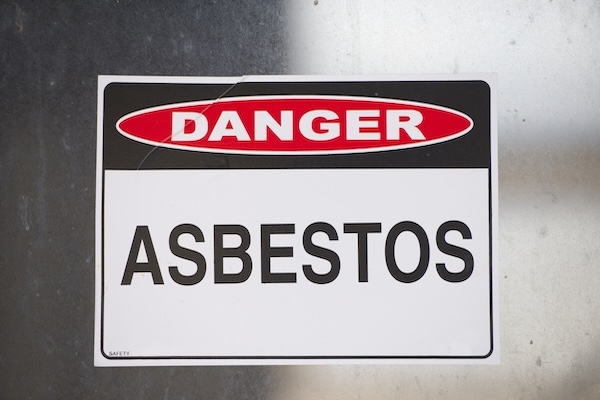
Learn how asbestos exposure latency affects disease development, research methods, and how long it may take for symptoms to appear.

Learn how meningioma and its treatment can affect thinking, mood, and daily life over time, and how patients and families can support long-term recovery.
© 2026, Injury Info. All rights reserved.