
Decades before mesothelioma or asbestos-related lung cancer shows up in a patient's file, there's often a paper trail, such as employment records, air sampling logs, regulatory filings, and industrial hygiene data, that researchers use to connect a disease to its cause. Because asbestos-related illnesses can take 30 to 50 years to develop after exposure, scientists must look far into the past to establish what happened. Understanding how that history is captured, preserved, and applied in health studies matters not just for researchers, but for anyone trying to make sense of an asbestos-related diagnosis.
Published on:
June 8, 2026
Category:
Health Resources
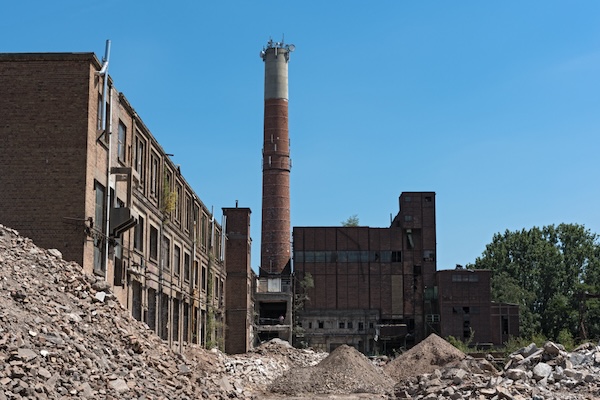
Asbestos was woven into the fabric of American industry throughout most of the 20th century. Its heat-resistant and fireproof qualities made it a go-to material across construction, shipbuilding, manufacturing, and transportation. According to OSHA, the heaviest exposures historically occurred in construction and ship repair, especially during renovation, demolition, and removal of asbestos-containing materials, as well as in factories producing asbestos-based insulation, textiles, friction products, and building materials.
The steel industry is a telling example. Asbestos was found in gaskets, brakes, protective clothing, refractory materials, and pipe insulation at facilities nationwide, and airborne fiber levels at some sites were measured significantly above regulatory limits during peak usage years.
At its height in the early 1970s, the U.S. was importing roughly 700,000 to 800,000 metric tons of asbestos per year. Because many occupations were affected, such as pipefitters, brake mechanics, and school custodians, among others, tracing individual exposure histories has always required casting a very wide net.
Researchers piece together past asbestos exposures from several overlapping types of records. Industrial hygiene data kept by employers is often the most direct. For example, OSHA mandates that employers maintain air monitoring records and medical surveillance files for a minimum of 30 years. In the steel industry, decades of air monitoring data from U.S. Steel, provided by OSHA's mandatory recordkeeping requirements, gave researchers access to personal airborne asbestos samples collected across multiple facilities between 1972 and 2006, making it possible to track exposure trends across four distinct regulatory periods.
Two key government databases fill in the broader picture. OSHA's Integrated Management Information System (IMIS) captures qualitative data from workplace compliance inspections, such as industry type, engineering controls, and worker classifications. Its companion database, the Chemical Exposure Health Data (CEHD), logs quantitative air sampling results, including asbestos fiber concentrations by duration, location, and industry.
Regulatory agencies have generated a substantial body of data that underpins modern asbestos research. OSHA established its first emergency standard limiting asbestos dust exposure in 1971, setting permissible exposure limits and requiring air monitoring, medical exams, and recordkeeping. The EPA's authority over asbestos increased significantly through the Clean Air Act of 1973, the Toxic Substances Control Act (TSCA) of 1976, and the Asbestos Hazard Emergency Response Act (AHERA) of 1986, which required asbestos inspections in every K–12 school building in the country.
Despite the breadth of available documentation, real gaps exist, and many of them are simply the result of time. Companies that used asbestos heavily during the mid-20th century have since closed, merged, or filed for bankruptcy, taking their employment files and air monitoring logs with them. Records that were never digitized have deteriorated or been discarded. Workers who held multiple jobs across different sites over decades may struggle to recall exact dates, employers, or the specific materials they worked with. Incomplete occupational history creates significant holes in exposure data that researchers cannot always fill. The further back in time an exposure occurred, the thinner the paper trail tends to be.
Asbestos research faces a fundamental challenge. Because the gap between first exposure and disease onset can span 30 to 50 years, scientists must work backward to establish causation. Extended latency has not only delayed the recognition of asbestos as a significant carcinogen, but has also made it more complex to estimate how many asbestos-related cancers have occurred, particularly because even a brief or distant exposure can be the responsible event, and may have been forgotten or never written down.
This is why the quality of historical documentation carries so much weight. Research built on verified air sampling records, timestamped employment histories, and regulatory inspection data produces more reliable exposure assessments, which in turn improve epidemiological models, disease projections, and the ability to attribute illness to a specific cause. For the people affected by asbestos-related disease, the difference between complete and incomplete records is often the difference between answers and uncertainty.
InjuryInfo.com offers general educational resources on asbestos exposure and related health conditions.

Learn the differences between acute, chronic, and serious health conditions. Review course development, timeline, and treatment needs for each type.

Chronic inflammation is linked to many serious conditions. Learn how researchers study it, what biomarkers they measure, and what the science currently shows.

Some GLP-1 users report gastroparesis, severe vomiting, and bowel obstruction. Learn the warning signs and when to seek urgent care.
© 2026, Injury Info. All rights reserved.