
The Global Burden of Disease study is the most comprehensive scientific effort ever undertaken to measure how illness, injury, and premature death affect populations worldwide. When researchers and policymakers discuss the "burden" of a disease, they use the term in a precise technical sense. It is one that shapes how data gets collected, compared, and reported across countries. Knowing how the framework works and where it runs into limits makes it easier to read public health statistics critically and understand why broad population numbers rarely map onto individual situations.
Published on:
October 12, 2026
Category:
Health Resources
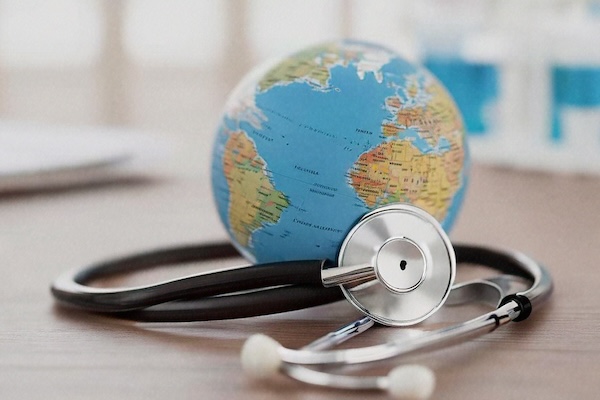
The Global Burden of Disease (GBD) study, led by the Institute for Health Metrics and Evaluation (IHME) at the University of Washington, tracks health loss across 204 countries and territories, covering 371 diseases and injuries with input from more than 17,000 researchers worldwide. The scale is enormous by any standard. This is not a single study, but an ongoing global collaboration, updated on a regular cycle, with each edition re-estimating the full data series back to 1990.
The central measurement is something called a disability-adjusted life year, or DALY. One DALY equals one lost year of healthy life, combining years cut short by premature death with years spent living with illness or disability. The value of a single metric is that it lets researchers put very different conditions on the same scale. For example, it would allow comparing the burden of neonatal disorders against cardiovascular disease across different populations and time periods.
Building those estimates requires pulling from vital registration systems, household surveys, disease registries, and health service records. The disability portion of the calculation assigns each condition a weight between 0 (full health) and 1 (equivalent to death), reflecting severity, then multiplies that weight by how many people live with the condition.[2] The mortality portion compares the actual age of death against a standard life expectancy benchmark.
GBD 2021 drew on nearly 101,000 data sources and reported findings with 95 percent uncertainty intervals. That last detail matters: the uncertainty intervals are not a caveat buried in the methods section; instead, they're a core part of how the findings are presented, reflecting an honest accounting of what the data can and cannot support.
Total DALYs globally rose from 2.63 billion in 2010 to 2.88 billion in 2021, but that increase was driven largely by population growth and aging, not by health getting worse per capita. Age-standardized DALY rates actually fell 14 percent over the same period.
What the aggregate number obscures is how differently that burden is distributed. In high-income countries, cardiovascular disease, cancer, and diabetes dominate. In lower-income countries, communicable diseases still account for a significant share of total DALYs, though that share has dropped considerably since 2000. The divergence reflects differences in healthcare access, sanitation, nutrition, and economic development, and it directly shapes how international health resources are allocated.
Disease burden doesn't land evenly, and a few factors explain most of the variation. Income and development level shape which diseases dominate. Communicable diseases remain a major driver of DALYs in lower-income regions, while chronic conditions become more prominent as countries develop.
Behavioral risks, particularly tobacco, are among the largest drivers of preventable burden globally. Smoking accounted for roughly 5.7 percent of total DALYs in 2021 (smoking is one of the top five risk factors worldwide, behind particulate matter air pollution and high blood pressure), with low- and middle-income regions carrying a disproportionate share. Age structure matters as well, with metabolic risks like high blood pressure and elevated blood glucose becoming more dominant as populations age.
At the global level, GBD data allows health progress to be compared across countries and tracked against targets like the Sustainable Development Goals (a set of 17 international development targets adopted by the United Nations in 2015, several of which relate directly to health outcomes, including reducing maternal mortality and ending preventable deaths among children). At the national level, it helps governments identify where health loss is concentrated and where intervention, whether targeting a modifiable risk factor like high blood pressure or expanding early screening, could make the most difference.
The data has real limits, particularly in regions where vital registration systems are weak or surveillance infrastructure is thin. In those settings, estimates carry wider uncertainty intervals and may undercount the true burden. And across all settings, the same constraint applies: GBD findings describe patterns in populations. They don't translate directly to what any individual person should expect from their own health situation.
The Global Burden of Disease study was built to inform policy decisions, not to answer questions about individual health situations. That distinction matters when you're trying to make sense of data that feels relevant to your own circumstances. If you choose, you may visit InjuryInfo.com to explore general educational resources. Injury Info provides information only and does not offer medical advice. You may share information for a preliminary legal review. Legal consultations are free and carry no obligation. Contacting us does not create an attorney–client relationship. No outcome is guaranteed, and any matter requires case-by-case evaluation by licensed counsel.

A late cancer diagnosis is more common than people realize. Get a plain-language breakdown of the systemic causes and what patients can do next.

Paraquat and other herbicides require chemical-resistant gloves, respirators, eye protection, and other PPE. Learn when exposure risk is highest.

Learn how brain tumors, including meningiomas, may disrupt balance and coordination and impact daily movement.
© 2026, Injury Info. All rights reserved.