
Throughout the mid-20th century, asbestos was widely used in construction. While undisturbed asbestos is generally considered lower risk, its fibers may pose health risks if they are released into the air we breathe. As construction materials age, deteriorate, or are disturbed through renovation, demolition, or routine maintenance, the microscopic fibers contained in those materials may become airborne.
When asbestos fibers are released, the health consequences may not be apparent for decades because asbestos-related disease symptoms generally do not appear for 20 to 50 years after initial exposure. As such, federal agencies have established regulatory frameworks, inspection requirements, and air-monitoring standards specifically aimed at buildings constructed during the decades of the heaviest asbestos use.
Published on:
June 8, 2026
Category:
Health Resources
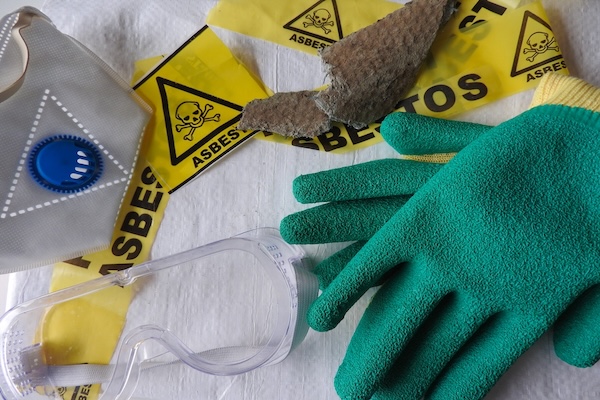
From the early twentieth century through the late 1970s, asbestos was incorporated into a wide range of construction materials due to its exceptional functional properties. Its fibers are resistant to heat, fire, and corrosion, qualities that made it an attractive additive for insulation, flooring, roofing, ceiling systems, and structural components.
Its fiber-reinforcing characteristics also improved the tensile strength and durability of cement and composite products. These properties, combined with low cost and wide availability, drove adoption across residential, commercial, industrial, and government construction before regulatory restrictions took hold.
Buildings erected prior to 1980 are often presumed to contain asbestos-incorporated materials.
The primary variable governing fiber release is a material's degree of friability. Friable means the material can be crumbled under hand pressure and is therefore likely to release fibers. Fibrous or fluffy sprayed-on materials used for fireproofing, insulation, or soundproofing are considered friable and readily release airborne fibers if disturbed. Materials such as vinyl-asbestos floor tile or roofing felts are considered nonfriable and generally do not emit airborne fibers unless they are subjected to sanding or sawing.
Over time, water damage, physical impact, vibration, or age-related deterioration can shift materials from an intact to a damaged state, increasing the likelihood of fiber release during routine building activities. Visual inspection can detect worsening conditions, such as progressive water damage, that signal an elevated risk of future fiber release, which is why ongoing condition monitoring is central to effective building management programs.
The range of construction materials that historically incorporated asbestos is extensive.
Under OSHA's general industry standard, employers must presume that thermal system insulation and surfacing materials in buildings constructed before 1980 contain asbestos unless laboratory analysis confirms otherwise.
When air monitoring is conducted in buildings with known or suspected asbestos-containing materials, analytical methods must distinguish asbestos fibers from other airborne particulates of similar size.
Phase contrast microscopy, or PCM, is commonly used for workplace personal air sampling, but it cannot differentiate asbestos fibers from non-asbestos fibers and cannot detect fibers below its resolution threshold.
Transmission electron microscopy, or TEM, provides greater accuracy at low concentrations and is the EPA's preferred method for supplemental area air monitoring.
The OSHA permissible exposure limit for asbestos is 0.1 fiber per cubic centimeter of air as an eight-hour time-weighted average, with an excursion limit of 1.0 fiber per cubic centimeter over a 30-minute period. Employers are required to conduct initial and periodic air sampling for workers who may be exposed at or above this threshold.
Inspection requirements for asbestos-containing materials exist at multiple regulatory levels. Under AHERA, EPA's asbestos regulations for schools, an accredited inspector must reinspect school buildings at least once every 3 years to reassess the condition of asbestos-containing materials, and a routine surveillance check must be conducted every 6 months. Under the EPA's Asbestos NESHAP regulations, any demolition or renovation of commercial, institutional, or industrial buildings must include a pre-work inspection, and the appropriate state agency must be notified before work begins if regulated asbestos-containing material is present.
These frameworks reflect a consistent regulatory principle: identifying the condition of asbestos-containing materials before disturbance is the most effective strategy for preventing fiber release. Air monitoring can only detect a problem after fibers have already been released, making proactive visual inspection the first and most important line of protection in any building management program.
If you or someone you know has a history of working in or around older buildings, or has been diagnosed with an asbestos-related illness such as mesothelioma or asbestosis, learning about the history of asbestos in construction is important. Explore Injury Info for more resources on asbestos fibers, construction materials, and exposure pathways.
Talc and asbestos share geological origins, making contamination a risk during mining. Learn how deposits are evaluated and what tests are used.

Learn what comorbidities are and how doctors prioritize symptoms, assess risk, and adjust care plans when multiple conditions are present.

Learn how talc exposure patterns are studied, what the data may show, and why conclusions require careful interpretation.
© 2026, Injury Info. All rights reserved.