
If you live or work in a building constructed before 1980, asbestos fireproofing materials may be present in the structure. Learning about the conditions under which they become hazardous is essential. Health authorities have stated that asbestos exposure may pose risks, and even short-term exposures have been studied in connection with long-term health outcomes, such as mesothelioma.
Asbestos-containing fireproofing materials were among the most widely applied products in commercial and institutional construction for decades, and many remain in place today. Knowing where these materials may be found, what disturbs them, and what steps reduce exposure risk is important for anyone who occupies or works in older buildings.
Published on:
June 8, 2026
Category:
Health Resources
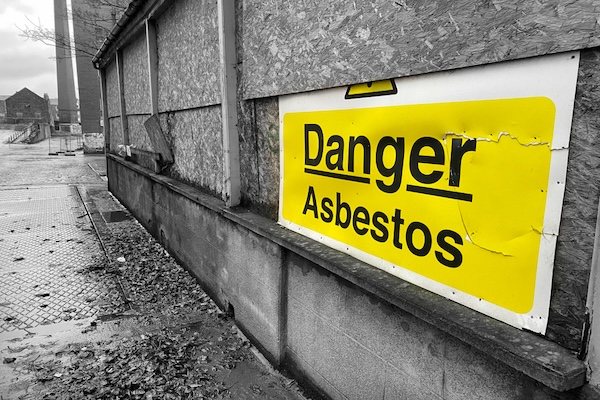
Asbestos became a standard component in construction materials throughout much of the twentieth century because of its exceptional usefulness to builders. Because of its high tensile strength and heat resistance, asbestos was used in a variety of building materials for insulation and fire-retardant applications. Its fibrous structure allowed it to bond effectively with other compounds, producing coatings that adhered to structural steel beams, ceilings, and ductwork to slow fire spread and protect load-bearing elements from heat-induced collapse.
Spray-applied asbestos fireproofing was particularly prevalent in high-rise buildings, schools, hospitals, and industrial facilities from the 1940s through the 1970s. These functional advantages, combined with low cost and wide availability, drove adoption across virtually every building sector before health risks were fully understood. Asbestos has since been classified as a known human carcinogen by the U.S. Department of Health and Human Services, the EPA, and the International Agency for Research on Cancer.
Even decades after regulations curtailed its use, asbestos-containing fireproofing materials remain in many older structures. Because removal is both costly and hazardous when not performed properly, asbestos-containing materials were frequently left in place if undisturbed and in good condition, a practice consistent with federal guidance at the time.
Common locations where asbestos fireproofing may still exist include structural steel beams and columns coated with spray-applied fireproofing, ceilings and plenum spaces above drop ceilings, boiler rooms and mechanical spaces, ductwork insulation and pipe coverings, and concealed structural components inside wall cavities.
Because these materials are often hidden from view, property owners and occupants may not realize asbestos is present until maintenance work, water damage, or renovation activity exposes it. Asbestos fibers may be released into the air when asbestos-containing material is disturbed during demolition work, building, or home maintenance, repair, or remodeling, and exposure typically occurs only when the material is disturbed or damaged.
Intact asbestos-containing materials in good condition generally do not release fibers. The risk changes significantly when those materials are disturbed.
Renovation, demolition, and even minor repair work can dislodge fibers and send them into the air, where they can be inhaled and become lodged in lung tissue. Activities that commonly increase exposure risk include drilling, sanding, or cutting into walls or ceilings containing asbestos-based coatings, removing old insulation or fireproofing, replacing HVAC systems or ductwork, demolishing older structural elements, and addressing water damage that has weakened asbestos-containing materials.
Studies have reported that asbestosis and pleural disease can be caused by breathing asbestos fibers, and asbestos exposure can also cause lung cancer and mesothelioma. These diseases are characterized by long latency periods often spanning 20 to 50 years or more, meaning exposures that occur today during building work may not produce symptoms for decades. Federal and state regulations require trained and certified professionals to assess and manage asbestos-containing materials before renovation or demolition work begins.
Asbestos became a standard component in construction materials throughout much of the twentieth century because of its exceptional usefulness to builders. Because of its high tensile strength and heat resistance, asbestos was used in a variety of building materials for insulation and fire-retardant applications. Its fibrous structure allowed it to bond effectively with other compounds, producing coatings that adhered to structural steel beams, ceilings, and ductwork to slow fire spread and protect load-bearing elements from heat-induced collapse.
Spray-applied asbestos fireproofing was particularly prevalent in high-rise buildings, schools, hospitals, and industrial facilities from the 1940s through the 1970s. These functional advantages, combined with low cost and wide availability, drove adoption across virtually every building sector before health risks were fully understood. Asbestos has since been classified as a known human carcinogen by the U.S. Department of Health and Human Services, the EPA, and the International Agency for Research on Cancer.
Suspected asbestos-containing materials, particularly deteriorating insulation, crumbling ceiling coatings, or damaged fireproofing, should never be touched or disturbed by untrained individuals. Property owners should arrange professional inspections before any renovation or major repair project, and removal or containment work must be performed only by licensed abatement specialists.
Breathing asbestos fibers has been associated with a buildup of scar-like tissue in the lungs called asbestosis, resulting in loss of lung function that could progress to disability and death. Asbestos is also associated with cancer of the lung and mesothelioma, a fatal malignant tumor of the membrane lining the lung or stomach.
For workers in construction, maintenance, and demolition, adherence to OSHA exposure standards and proper use of protective equipment are regulatory requirements, not optional precautions.
Learning about the presence and risks of asbestos fireproofing is only one part of the equation. For individuals who may have been exposed, whether through work, home environments, or renovation activities, knowing what to do next can feel overwhelming. Explore Injury Info to learn more about exposure to asbestos and potential health concerns.
The asbestos latency period can last decades. Learn how researchers use employment records, air monitoring data, and exposure databases to reconstruct the past.

Why is fatigue persistent in serious illness? Learn how research examines biological mechanisms and how symptoms may be tracked over time.

Learn the differences between diagnosis and prognosis in cancer care. Understand what each means for patients with ovarian cancer, mesothelioma, and lymphoma.
© 2026, Injury Info. All rights reserved.