
When a health agency takes an official position on whether a substance such as talc powder poses a risk, that decision reflects years of scientific review. The official designations of each agency are specific for a reason and should not be reported as if they are interchangeable. Several agencies, both in the United States and internationally, have evaluated talc powder in recent years, and their roles, methods, and conclusions differ. If you’re trying to make sense of the science behind a talc powder lawsuit, a useful place to start is understanding what each agency actually does and what its findings actually mean.
Published on:
October 12, 2026
Category:
Health Resources
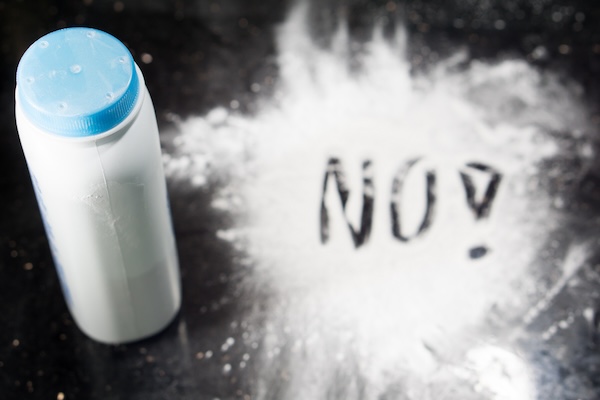
Health agencies that evaluate substances like talc powder don't reach conclusions based on a single study. They assemble independent scientific experts, gather research spanning human health data, animal studies, and laboratory evidence, and work through that material systematically before arriving at any conclusion. The goal is to assess the full weight of available evidence rather than react to any one result.
Different agencies are designed to complete different parts of this work. Some agencies, such as the Environmental Protection Agency (EPA), focus on classifying whether a substance has the potential to cause harm, a process called hazard identification. Others focus on regulating products, setting safety standards, or assessing risk in specific exposure scenarios.
Hazard identification and risk assessment are frequently confused, but understanding the differences is important. Hazard identification simply asks: Is this substance capable of causing harm under some conditions? Risk assessment goes a step further and asks: given the amount of exposure most people actually have, how likely is harm to occur in practice?
Some agencies are specifically designed to do hazard identification. These agencies evaluate the evidence and classify substances based on the strength of the evidence, without making claims about individual risk levels. Other agencies, such as the U.S. Food and Drug Administration (FDA), focus more directly on what those findings mean for how products are regulated and sold to consumers.
Several agencies have weighed in on talc powder, each from a different angle. The International Agency for Research on Cancer (IARC), which is the specialized cancer agency of the World Health Organization, classified perineal use of talc-based body powder as “probably carcinogenic to humans” (Group 2A) in July 2024. Within IARC's framework, this classification reflects limited evidence in humans and sufficient evidence in experimental animals, along with supporting mechanistic data. The designation describes the strength of the evidence evaluated under IARC criteria and does not quantify individual risk.
In the United States, the FDA has been actively engaged with talc powder safety from a consumer product standpoint. The FDA has conducted repeated rounds of testing on talc-containing cosmetic products for asbestos contamination, a known carcinogen that can occur naturally in talc deposits. Congress mandated that the FDA establish standardized testing methods for detecting asbestos in talc-containing cosmetics, reflecting recognition at the federal legislative level that this is an unresolved safety issue. In 2024, the FDA proposed a rule to standardize the testing methods, but then withdrew the proposed rule in 2025. A new proposal is expected in 2026.
The EPA has noted in certain risk discussions that talc mined from ore deposits containing
asbestos may present contamination concerns and that asbestos fibers can occur alongside talc in some geological formations. Regulatory assessments evaluate how such factors may affect exposure scenarios.
When a headline reports that talc has been classified as "probably carcinogenic," it's easy to read that as a final verdict. But that phrasing has a specific technical meaning within IARC's framework. It describes a tier of evidence strength, not a certainty about individual harm.
Different agencies use different classification language, which can add to the confusion. These systems aren't always directly comparable, but they're all asking versions of the same fundamental question: what does the evidence show? In talc powder lawsuit proceedings, expert witnesses are frequently called to explain exactly what a given classification establishes, and what it doesn't, which is why understanding the distinctions is important.
Multiple different health agencies, using different methods and mandates, have focused on talc powder in recent years. Their findings are not identical and reflect different mandates and evaluation criteria. Knowing how to read those findings is an important part of understanding the broader talc powder lawsuit landscape.
If you choose, you may visit InjuryInfo.com to explore general educational resources. Injury Info provides information only and does not offer medical advice. You may share information for preliminary legal review. Consultations are free and carry no obligation. Contacting us does not create an attorney–client relationship. No outcome is guaranteed, and any matter requires case-by-case evaluation by licensed counsel or co-counsel.

The asbestos latency period can last decades. Learn how researchers use employment records, air monitoring data, and exposure databases to reconstruct the past.
Long-term consumer talc exposure is rarely recorded. Learn why researchers struggle to quantify it years later and how those limitations shape talc lawsuits.

Reading your own radiology report before your doctor explains it can cause unnecessary anxiety. Learn what the terms mean and why context matters.
© 2026, Injury Info. All rights reserved.