
Agricultural chemicals applied to fields do not always remain where they are applied, and learning where they go and how they move through air, water, and soil is as important as understanding how they are used. Researchers use environmental monitoring programs, sampling methods, and large-scale studies to track this movement and assess its implications for human health and surrounding communities. For anyone living or working near agricultural areas, learning how this research works is an important step toward understanding potential exposure risks.
Published on:
June 8, 2026
Category:
Health Resources
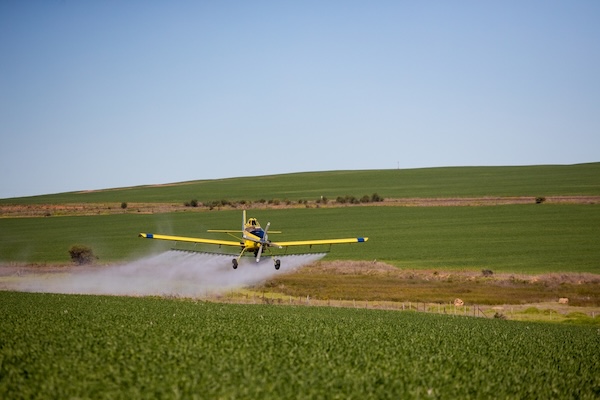
After application, rainfall, irrigation, and natural soil processes can carry pesticides and fertilizers into surrounding areas, including groundwater and nearby streams and rivers. To study this movement, researchers collect soil and water samples from agricultural and urban regions over time. These samples are tested to measure chemical concentrations and identify how substances break down or persist in the environment.
The U.S. Geological Survey found that one or more pesticide compounds were almost always present at detectable levels in stream water, with detectable concentrations found more than 90 percent of the time across all streams sampled that had significant agricultural or urban land use in their watersheds.
By analyzing samples across seasons and locations, scientists can begin to map how chemicals travel, where they accumulate, and how long they remain in the environment.
Environmental monitoring programs are designed to track the presence and movement of agricultural chemicals on a broader scale. These programs typically combine multiple sampling methods to provide a more complete picture of exposure patterns. Researchers measure chemical levels in air, surface water, groundwater, and soil. Air monitoring is especially important in agricultural regions, as pesticides may become airborne during and after application.
The National Water-Quality Assessment Program and the National Stream Quality Accounting Network are USGS monitoring programs that measure pesticide concentrations in the nation's streams and rivers, providing nationally consistent data and information on water quality.
In addition to measuring concentrations, scientists track how frequently chemicals appear and how those levels change over time, allowing them to identify trends such as seasonal spikes during planting or spraying periods.
Two of the most important factors influencing the distribution of agricultural chemicals are runoff and drift. Both processes can carry pesticides far beyond the original application site.
Pesticide runoff occurs when rain or irrigation water flows over treated land, picking up chemicals and transporting them into nearby waterways. Shallow groundwater in agricultural and urban areas is used for drinking water, and groundwater contamination is difficult to reverse once it occurs.
Pesticide drift occurs when pesticide particles or droplets travel through the air during or after application. Pesticide spray drift can pose health risks when sprays and dusts are carried by the wind and deposited on nearby homes, schools, playgrounds, and farm workers in adjacent fields. Wind conditions, temperature, and application methods all influence how far these particles move. State and local agencies receive thousands of complaints about drifting pesticides each year.
Because agricultural chemicals can travel across large distances and affect multiple environmental systems, researchers often rely on large-scale studies to understand exposure patterns. These studies may span entire regions, states, or even the entire country.
Large-scale monitoring allows scientists to compare data from different locations and identify broader trends. Long-term studies can reveal whether certain chemicals are becoming more or less common in water supplies, or how environmental conditions influence distribution over time.
The USGS Watershed Regressions for Pesticides (USGS WARP) model estimated pesticide concentrations using information on the physical and chemical properties of pesticides, agricultural pesticide use, soil characteristics, hydrology, and climate, drawing on USGS monitoring of pesticides in streams across the nation since 1992. Broader studies such as this are particularly valuable for informing public health policy and environmental regulation, as they may help identify trends in chemical presence and distribution.
While environmental sampling is a powerful tool, it has limitations.
One of the biggest challenges is variability. Chemical levels can change quickly depending on weather conditions, application timing, and local farming practices. A single sample may only reflect conditions at a specific moment, meaning researchers must collect data repeatedly to build an accurate picture.
Another limitation is that detecting a chemical in the environment does not automatically translate into a clear understanding of human health risk. Exposure depends on factors such as duration, concentration, and the manner in which individuals come into contact with the chemical.
In one study, researchers identified almost 3,000 cases of acute illness associated with agricultural pesticide drift across 11 states, with 47 percent of those affected exposed at work and 14 percent being children under 15 years of age, illustrating how off-target chemical movement can affect both workers and nearby communities in ways that routine environmental sampling alone may not capture.
However, exposure levels and outcomes may vary based on multiple factors. For this reason, scientists typically combine environmental sampling with biological testing and health studies to build the most complete picture of actual exposure.

For individuals living or working near agricultural areas, questions about environmental exposure can feel complex and personal. To learn more, explore Injury Info’s resources.

Learn how meningioma and its treatment can affect thinking, mood, and daily life over time, and how patients and families can support long-term recovery.

Learn why diagnoses like mesothelioma, ovarian cancer, and non-Hodgkin lymphoma can involve legal considerations related to exposure and product safety.
Exposure to asbestos, pesticides, and other toxins can cause cancer and serious illness. Learn what symptoms to watch for.
© 2026, Injury Info. All rights reserved.