
For decades, researchers have asked a straightforward question with a complicated answer: could regular use of talc baby powder be connected to ovarian cancer? The research that followed is extensive, sometimes inconsistent, still evolving, and has become central to talc ovarian cancer lawsuit proceedings across the country. Keep reading to understand how researchers approach this question, what they've found, and why the findings must be read carefully.
Published on:
October 12, 2026
Category:
Health Resources

Most studies in this area focus on women who used talc-based powders in the perineal region (the genital area) for hygiene or personal comfort. Because people don’t usually report talc use in any official capacity, researchers have to ask women directly: Did you use this type of product? How often? For how many years? Those answers are then compared across large groups of women to look for patterns.
When researchers want to understand what all of those individual studies actually add up to, they conduct what's called a systematic review. This is a structured analysis that examines findings from dozens of studies to look for consistent patterns, rather than evaluating each study in isolation. Over the years, researchers have examined case-control studies, cohort studies, and broader research summaries on talc and female reproductive cancers to assess what the evidence may collectively show. That body of research has grown substantially over the past decades, and it continues to be examined, debated, and refined as new data becomes available.
When researchers study talc use, they don't just look at whether someone used it or not. They try to understand how often, for how long, and in what manner. Studies have also looked at whether women had tubal ligation surgery, since some researchers have theorized that this could affect whether talc applied externally could reach the ovaries at all.
Some studies have found that women who reported using talc in the genital area were diagnosed with ovarian cancer at higher rates than women who did not report such use, though findings have varied across study designs and populations. In certain analyses, reported associations appeared possibly stronger with longer and more frequent use.
Those are population-level numbers. They describe a pattern observed across large groups of women, not a prediction about what will or won't happen to any individual person. That distinction may matter enormously when this research is discussed in the context of a talc ovarian cancer lawsuit.
The type of research used to study connections between talc exposure and ovarian cancer is called epidemiology. Essentially, epidemiology is the science of tracking health patterns across large groups of people. Instead of running lab experiments, epidemiologists study real-world data: who got sick, what they were exposed to, and whether that exposure is prevalent in people who got sick, rather than people who didn't.
The most common approach has been case-control studies, where researchers compare women who have been diagnosed with ovarian cancer to women who haven't, and ask both groups about their talc use history. When women with ovarian cancer consistently report higher rates of talc use, researchers then work to rule out other explanations, such as age, family history, whether a woman ever used birth control pills, and other factors that are also linked to ovarian cancer risk. Other studies follow large groups of women over many years, tracking both their habits and their health outcomes, which helps address some of the memory-related limitations of asking people to look back in time.
Epidemiology research tells us about groups, not individuals. When a study finds that women who used talc were more likely to develop ovarian cancer than women who didn't, that's a statement about a statistical pattern across thousands of people; it is not a prediction about any specific woman's health.
Even where a population-level risk increase has been identified, the individual lifetime risk of ovarian cancer may remain relatively low in absolute terms, but when you're talking about millions of women who used these products, even a modest increase in risk may translate to a significant number of people. That distinction between population risk and individual risk may emerge more often in talc ovarian cancer lawsuit proceedings, where expert witnesses are often called to explain exactly what the research does and does not show.
Even the most carefully designed studies in this area may have real limitations. Since there's no official record of who used talc and for how long, almost all of this research may depend on people's memories, which are often unreliable. Studies have also defined and measured talc use in different ways, which may make it harder to directly compare results across studies.
Differences in study design, population, and how exposure was defined may have contributed to inconsistencies in the findings across the literature. That's not a reason to dismiss the research, but it may be a reason to read it carefully and avoid drawing more certainty from it than the evidence actually supports. In talc ovarian cancer lawsuits, expert witnesses are crucial because they help explain the distinctions and limitations among the many scientific studies.
The research connecting talc exposure and ovarian cancer has been building for decades, and it continues to develop. For anyone trying to make sense of the talc ovarian cancer lawsuit landscape, it is important to understand how the science works and what it can and can’t tell us.
If you choose, you may visit InjuryInfo.com to explore general educational resources. Injury Info provides information only and does not offer medical advice. You may share information for preliminary legal review. Initial consultations are free and carry no obligation. Contacting us does not create an attorney–client relationship. No outcome is guaranteed, and any matter requires claim-by-claim evaluation by licensed counsel or co-counsel.

Learn how the FDA reviews hormonal contraceptive safety, including post-market surveillance, adverse event reports, and updated research findings.
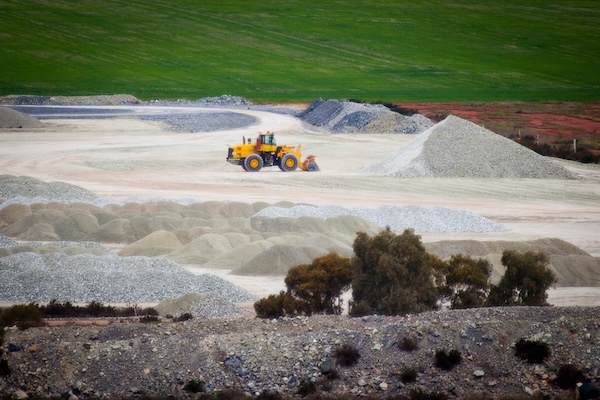
Talc and asbestos share geological origins, making contamination a risk during mining. Learn how deposits are evaluated and what tests are used.

Learn the early NEC symptoms in premature infants, how doctors stage severity, and the short- and long-term effects families should understand.
© 2026, Injury Info. All rights reserved.