
Paraquat has been applied by millions of agricultural workers for decades. Whether a worker can document occupational paraquat exposure later in life often comes down to what was recorded, how consistently it was tracked, and whether those records survived.
Published on:
June 8, 2026
Category:
Health Resources
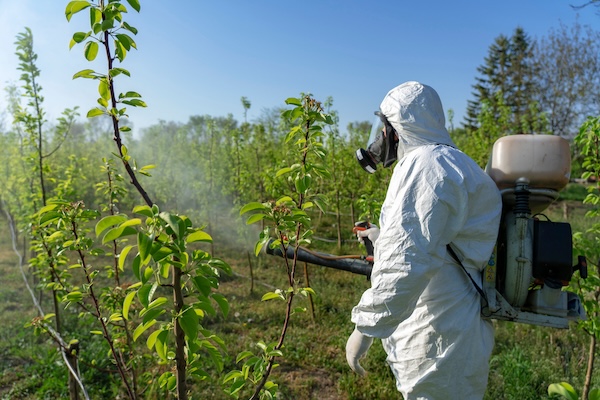
In the United States, occupational chemical recordkeeping is set by the Occupational Safety and Health Administration (OSHA). Employers are legally required to maintain accurate records of employee exposures to toxic substances and harmful physical agents. This means farms and agricultural employers who used paraquat were expected to document relevant exposure events as part of their workplace safety obligations.
The EPA’s Worker Protection Standard (WPS) further governs pesticide use in agricultural settings, requiring employers to notify workers of pesticide applications, maintain restricted-entry intervals, and ensure handlers are properly trained. These notifications and training logs become part of the formal workplace reporting trail that can later be reviewed in regulatory or research contexts.
In practice, recordkeeping has varied across employers and regions. Smaller farms and operations in regions with limited regulatory oversight have historically kept far less consistent records than larger, more heavily regulated employers.
For workers who mixed, loaded, or sprayed paraquat, exposure documentation should ideally include chemical handling logs, Safety Data Sheets (SDS), PPE use records, and biological monitoring results.
In practice, most workplaces may not collect the day-to-day level of biological data necessary to keep accurate logs of individual exposure. Safety records are more commonly limited to application logs and pesticide purchase receipts, leaving a potentially incomplete picture of individual worker exposure.
The frequency of exposure monitoring has a direct bearing on how reliable long-term records are. OSHA requires that exposure monitoring be conducted at intervals sufficient to ensure that worker exposure does not exceed permissible limits and that all results be preserved for at least 30 years. For biological monitoring results specifically, preservation requirements align with whatever standard governs the substance in question.
In reality, occupational paraquat exposure monitoring has often been conducted on a single-day or single-season basis rather than continuously. Research has shown that paraquat absorption varies significantly by crop type, work hours, and application method, meaning a single measurement may not reflect cumulative exposure over years of work. Banana farm handlers showed substantially higher urinary paraquat levels than palm oil farm workers, largely due to longer hours and different application methods. Without regular, repeated monitoring across different work seasons and crop cycles, the cumulative exposure picture for any individual worker may be incomplete.

A significant challenge in long-term paraquat exposure cases is that paraquat has been in widespread use for over 40 years, but robust biological monitoring methods sensitive enough to detect low-level occupational exposure were not widely available until relatively recently. Earlier studies using conventional analytical techniques had detection limits of 10 to 50 ng/mL in urine, which meant that many workers with low-level exposure may not have been detected in the records.
The introduction of more sensitive enzyme-linked immunosorbent assay (ELISA) methods and an even more sensitive lateral flow immunoassay (LIFA) method has revealed that meaningful paraquat absorption may have been present in populations where earlier methods did not detect measurable levels. This means occupational records from the 1970s through 1990s may systematically underrepresent exposure, not because exposure wasn’t occurring, but because the monitoring tools weren’t sensitive enough to capture it.
Even when exposure data was collected at the time, long-term retention poses its own challenges. OSHA mandates that employee exposure records be preserved for a minimum of 30 years, and medical records for the duration of employment plus 30 years. Employers who intend to dispose of records at the end of this retention period are required to notify the National Institute for Occupational Safety and Health (NIOSH) and offer to transfer those records.
Business closures, ownership changes, and informal recordkeeping practices, especially in small agricultural operations, mean that critical exposure documentation frequently disappears long before a worker develops a diagnosis that might be linked to their past work. A worker who spent a decade applying paraquat on a small family farm in the 1980s may find that no formal exposure records ever existed, or that whatever was kept has long since been discarded.

If you or a loved one worked with paraquat and is now facing a serious diagnosis, access to clear and reliable information can be helpful. InjuryInfo.com offers general educational information on paraquat exposure and related health conditions.

Lung cancer symptoms can resemble common illnesses. Learn how persistent symptoms are evaluated and when further medical review may be needed.
Learn how asbestos exposure latency affects disease development, research methods, and how long it may take for symptoms to appear.
Exposure to asbestos, pesticides, and other toxins can cause cancer and serious illness. Learn what symptoms to watch for.
© 2026, Injury Info. All rights reserved.