
Most conversations about paraquat center on farmworkers and licensed pesticide applicators, the people who mix, load, and apply the herbicide directly. But a growing body of environmental health research examines a different and often overlooked question: what happens to paraquat after it leaves the sprayer? Where else does it go, and who may come into contact with it?
Residents of agricultural communities and individuals living near treated fields may be exposed to paraquat through pathways beyond direct occupational contact. It is essential context for anyone trying to make sense of the science to learn how researchers measure and interpret that environmental exposure.
Published on:
June 8, 2026
Category:
Health Resources
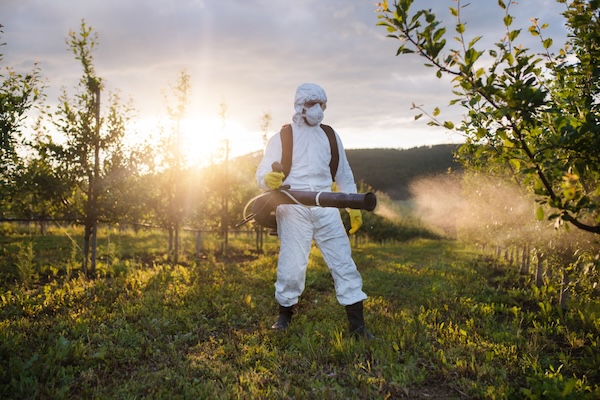
Paraquat can reach people who never set foot in a field through several distinct routes. The most immediate is spray drift, which is the movement of herbicide droplets or vapor away from the application site during or after spraying. The EPA has acknowledged the potential exposure risks from spray drift to bystanders at the edge of treated fields, and its 2021 interim decision on paraquat required mandatory drift management measures and residential area buffers for all aerial applications specifically to address this risk. During spraying, a significant portion of applied pesticides can become airborne and travel beyond the intended target area, with smaller droplets capable of traveling the farthest.
Dietary exposure is a second route. The EPA has established tolerance limits for paraquat residues in more than 80 raw agricultural commodities and processed foods, acknowledging that paraquat applied to growing crops can persist on harvested produce at regulated levels. Drinking water represents a third pathway, particularly in heavily agricultural regions where surface runoff during rain events can carry herbicide residues into streams, rivers, and reservoirs.
Paraquat's chemistry complicates all of these pathways. It is highly soluble in water but binds rapidly and nearly irreversibly to clay particles in soil, which limits how far it travels under normal conditions, but doesn't prevent transport via eroded sediment or surface runoff. It is also resistant to microbial and photodegradation in water, with a soil half-life estimated between 1.3 and 13 years depending on soil type, meaning residues from past applications may still be present long after spraying has stopped.
Environmental health researchers use several methods to detect and quantify paraquat in soil and water. Standard laboratory approaches include high-performance liquid chromatography (HPLC), enzyme-linked immunosorbent assay (ELISA), and colorimetric reduction methods. There are field test kits capable of detecting paraquat in water and vegetable samples at concentrations as low as 0.30 mg/L.
At the population scale, researchers have drawn on national monitoring databases rather than site-specific sampling. One study used county-level paraquat use data from the USGS National Water Quality Assessment Program, measured as kilograms of active ingredient applied per square mile, as its primary exposure metric. It paired that data with end-stage renal disease incidence across all counties in the contiguous United States from 2010 through 2017. This approach allows researchers to analyze exposure-response relationships across large geographies without requiring individual-level testing, though it also carries significant limitations, which are discussed below.
Environmental health studies of paraquat face fundamentally different challenges than occupational studies. In workplace settings, researchers can measure direct exposure through personal air monitoring, urine testing, and application records, producing individual-level estimates with relatively high precision. Environmental studies, by contrast, typically rely on indirect proxies: pesticide use intensity per geographic area, proximity to agricultural land, or modeled estimates of drift. None of these captures the actual dose received by any individual.
This distinction matters because paraquat is a restricted-use pesticide that can only be applied by licensed applicators, meaning the gap between applicator exposures and those of nearby residents is generally considered different in scale and context. Environmental studies are designed to detect population-level signals rather than individual risk; they are best understood as hypothesis-generating evidence, not definitive proof of causation.
One of the most consistent findings in paraquat environmental health research is that exposure is highly uneven, closely tracking patterns of agricultural land use. The communities most likely to experience higher levels of environmental paraquat presence are often rural, lower-income, and reliant on agricultural employment; populations that also face greater barriers to environmental monitoring, medical screening, and awareness of exposure risks.
The EPA's own drift research has documented that paraquat aerosols can travel varying distances from application sites under certain wind and temperature conditions, extending the potential exposure zone well beyond the borders of treated fields. This research has recently led the EPA to reconsider some of its previously established standards.
Paraquat's chemistry complicates all of these pathways. It is highly soluble in water but binds rapidly and nearly irreversibly to clay particles in soil, which limits how far it travels under normal conditions, but doesn't prevent transport via eroded sediment or surface runoff. It is also resistant to microbial and photodegradation in water, with a soil half-life estimated between 1.3 and 13 years depending on soil type, meaning residues from past applications may still be present long after spraying has stopped.

The current evidence base for non-occupational paraquat exposure has real limitations that researchers consistently acknowledge. Ecological study designs assign exposure based on geographic area rather than individual measurement, cannot establish causation, and are susceptible to confounding by other county-level variables such as income, healthcare access, and co-exposures to other agricultural chemicals that independently influence health outcomes. Exposure lag assumptions also introduce uncertainty: the study discussed above tested both 15- and 20-year lags and found differing effect sizes, illustrating how sensitive results can be to modeling choices.
Biomonitoring data for environmental paraquat exposure in non-occupational populations remains limited. While urine testing can detect paraquat in acutely or occupationally exposed individuals, community-level biological surveillance studies are scarce, leaving the true distribution of absorbed dose in residential populations largely unknown. The National Pesticide Information Center has noted that all major reviews, across different study combinations and analytical methods, have concluded that more research and better data are needed to fully characterize the relationship between environmental paraquat exposure and chronic disease outcomes.
Visit InjuryInfo.com offers general educational information on paraquat exposure.

Some GLP-1 users report gastroparesis, severe vomiting, and bowel obstruction. Learn the warning signs and when to seek urgent care.

Learn how brain tumors, including meningiomas, may disrupt balance and coordination and impact daily movement.

Learn to read medical reports including lab tests, imaging studies, and biopsy results for serious illnesses like ovarian cancer, mesothelioma, and lymphoma.
© 2026, Injury Info. All rights reserved.