
Decades of scientific investigation have examined the effects of prolonged exposure to talc-containing products, spanning months, years, and decades. Researchers across multiple disciplines have worked to understand how exposure is defined, measured, and tracked, as well as the patterns that emerge when large populations are studied over time.
Published on:
October 12, 2026
Category:
Health Resources
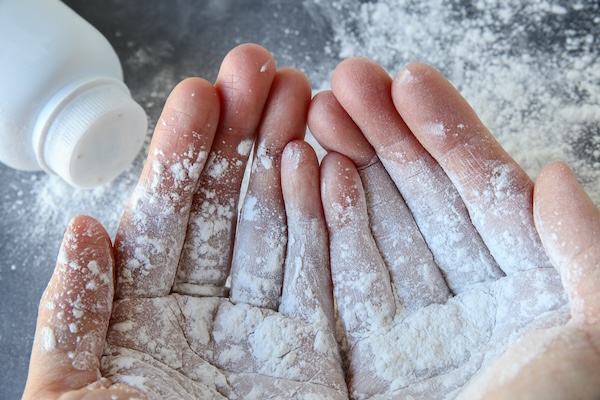
Before any long-term study can measure the effects of talc exposure, researchers must first define what "exposure" actually means in a scientific context. This is more complex than it may appear. Talc is a naturally occurring mineral used in a wide range of consumer and industrial products, and the form, concentration, and duration of contact can vary enormously among individuals.
In health research, talc exposure is typically characterized by the route of contact (inhalation or topical application), the frequency of use, the duration of exposure over a time period, and whether the talc in question was cosmetic-grade or industrial-grade. Certain studies also consider whether the talc was potentially contaminated with asbestos, a separate mineral that sometimes occurs naturally alongside talc deposits.
Long-term talc research has relied on several different study designs, each with distinct strengths and limitations. Cohort studies follow groups of individuals over time, comparing health outcomes between those with and without talc exposure. Case-control studies work in the opposite direction, starting with individuals who have a specific condition and working backward to examine prior exposures. Population-level analyses, also called ecological studies, examine trends across large demographic groups. These approaches allow researchers to detect patterns that wouldn't be visible in smaller samples.
One of the most important distinctions in talc research is the difference between occupational and consumer exposure. Workers in talc mining, milling, and manufacturing often experience significantly higher levels of airborne talc particles than the average consumer using a personal care product.
Occupational studies have historically examined populations such as talc miners and millers, where inhalation exposure is more concentrated and can span decades of employment. These studies have contributed to a broader understanding of respiratory effects related to inhaled mineral dusts. Consumer exposure research, by contrast, tends to focus on the topical or incidental inhalation exposure associated with cosmetic products used in personal hygiene routines. Separating these two categories is essential because the nature, intensity, and duration of exposure are fundamentally different between occupational and consumer settings.
Measuring talc exposure over time presents significant methodological challenges. Most long-term studies rely on self-reported data. Participants are asked to recall how often they used talc-containing products and for how many years. This approach, while practical for large studies, introduces the possibility of recall bias, where individuals may not accurately remember past behaviors.
Study results on talc exposure are not uniform or consistent. This variation is a normal feature of evolving science, not necessarily a flaw in any single study. Several factors contribute to differing results across the body of research. Study populations differ in age, geography, lifestyle factors, and the specific products people used. Analytical methods have become more sophisticated over time, allowing newer studies to control for variables that earlier research could not account for. Additionally, the composition of talc products has changed over decades, meaning that participants in studies conducted in different eras may have been exposed to chemically distinct products.
Evidence from epidemiology studies has been mixed, and research in this area continues to evolve, as methods and data improve. This scientific complexity is one reason why talc lawsuits often involve extensive expert testimony from researchers who can speak to the nuances of long-term study design and data interpretation.
Talc exposure research spans decades, involves competing methodologies, and continues to evolve. That complexity doesn't make the science inaccessible, but it does make having the right resources in your corner genuinely important.
If you choose, you may visit InjuryInfo.com to explore general educational resources. Injury Info provides information only and does not offer medical advice. You may share information for preliminary legal review. Legal consultations are free and carry no obligation. Contacting us does not create an attorney–client relationship. No outcome is guaranteed, and any matter requires case-by-case evaluation by licensed counsel or co-counsel.

Some GLP-1 users report gastroparesis, severe vomiting, and bowel obstruction. Learn the warning signs and when to seek urgent care.
Lung cancer symptoms can resemble common illnesses. Learn how persistent symptoms are evaluated and when further medical review may be needed.
The retraction of a foundational Roundup study raises questions about scientific integrity and glyphosate health risks. Here's where the research stands today.
© 2026, Injury Info. All rights reserved.